
Lead Generation Strategy for Small Businesses
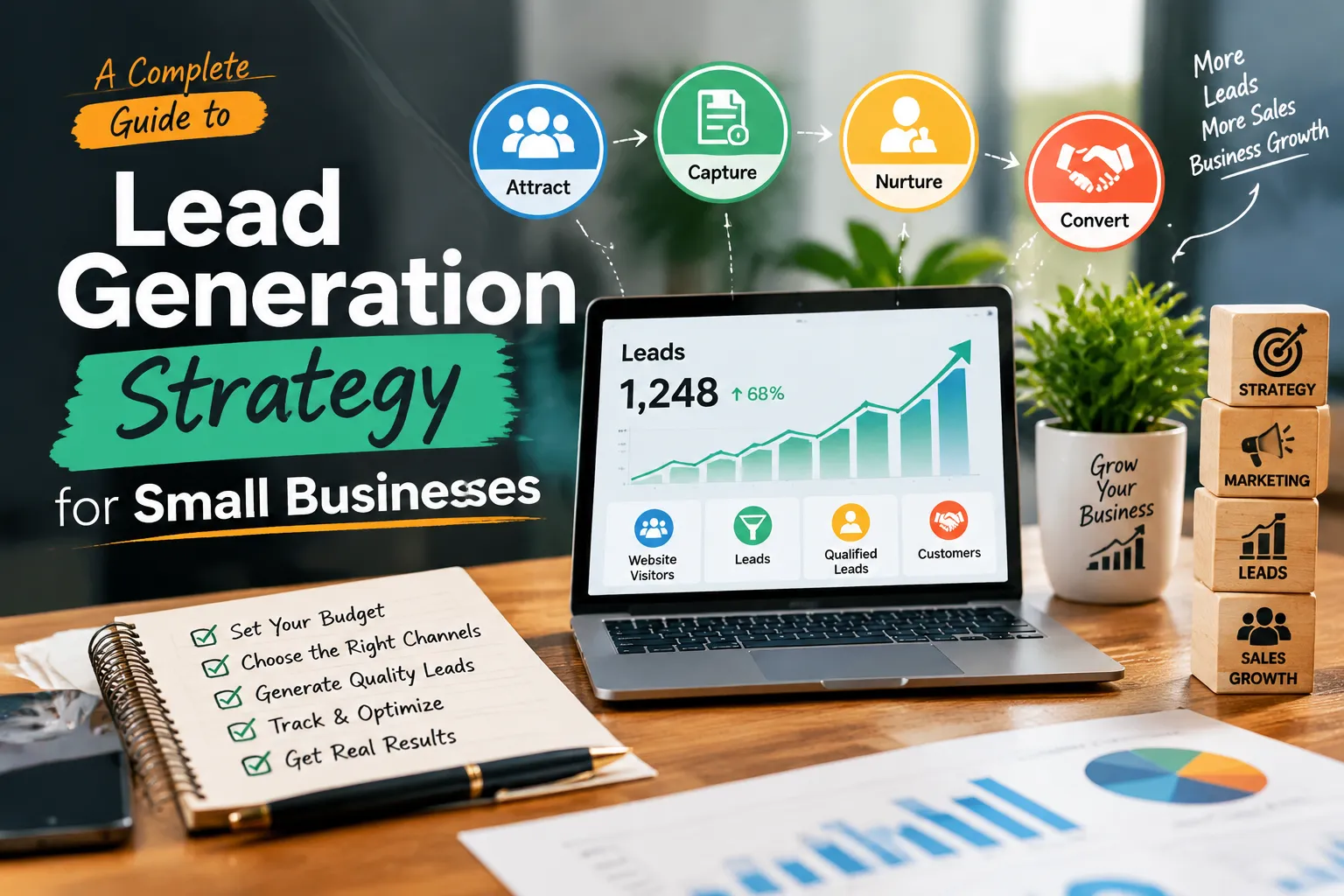
The right lead generation strategies for small businesses turn potential customers into qualified enquiries through targeted marketing, valuable content, and a consistent system that drives sustainable growth.
Generating leads is essential for small business growth, but attracting visitors does not automatically produce customers. This guide explores practical acquisition strategies, SEO, social media, paid advertising, email marketing, referrals, and conversion optimization to help businesses attract qualified prospects, reduce wasted spending, and build a predictable sales pipeline.
What Is Lead Generation for Small Businesses?
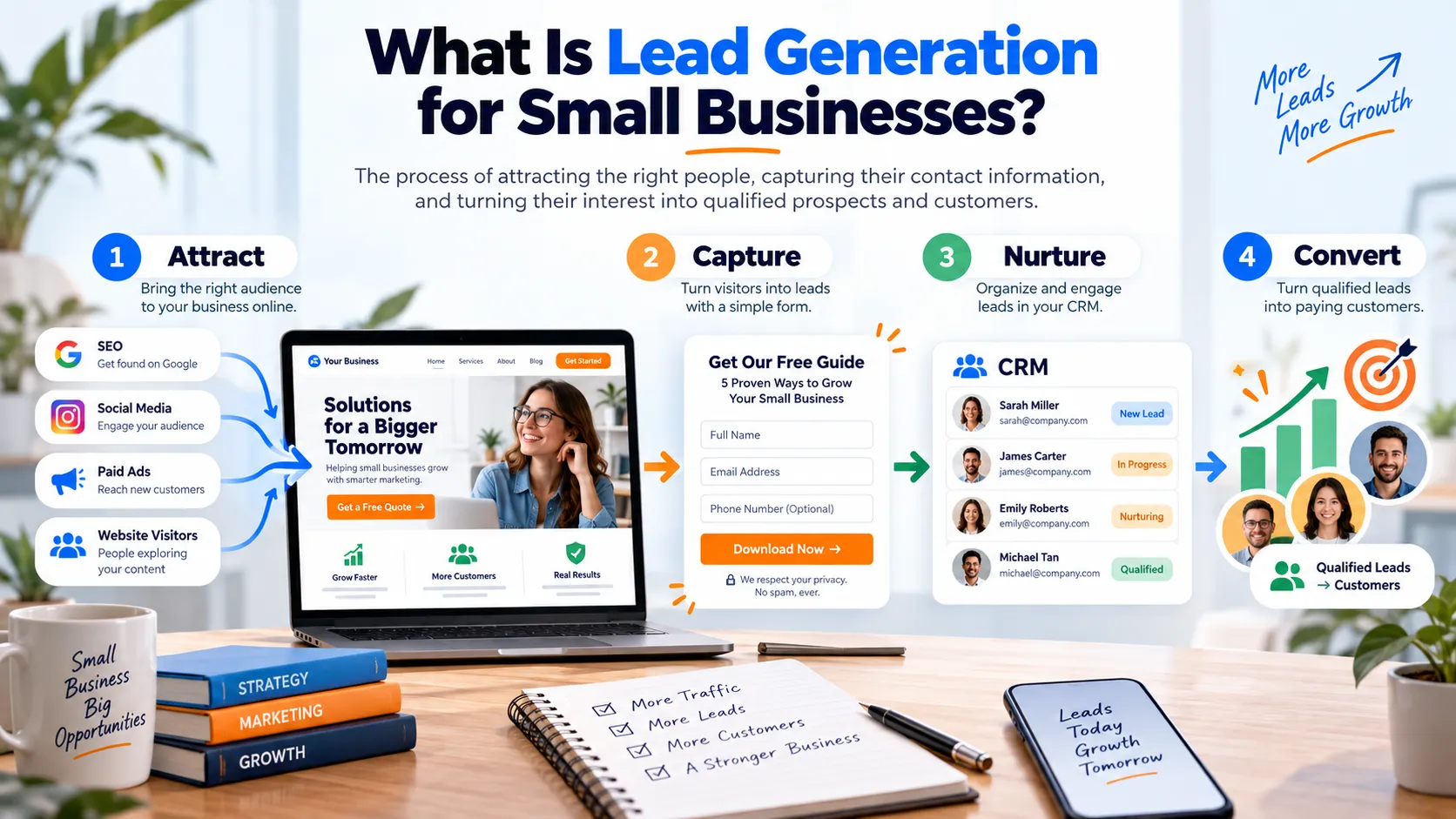
Lead generation is the process of attracting potential customers and encouraging them to express interest in a company’s products or services. A lead may submit a contact form, request a quotation, book a consultation, subscribe to a newsletter, or contact a business directly.
For a small business, generating leads means finding people who have a genuine reason to consider its products or services. The objective is not simply to increase website traffic or collect large numbers of email addresses. It is to develop relationships with prospects who have a reasonable chance of becoming paying customers.
For example, imagine a small web design company that wants to attract restaurant owners. Publishing an article about website design costs can attract people researching the subject. Offering a free website consultation can encourage interested readers to share their contact details. The company can then review their requirements, recommend suitable solutions, and follow up with relevant proposals.
This process connects visibility, engagement, and sales.
Effective lead generation strategies for small businesses combine organic marketing, paid promotion, customer relationships, and conversion-focused website experiences. Each activity should serve a clear purpose within the customer journey.
Lead Generation vs. Lead Qualification
Lead generation and lead qualification are related but different activities.
Lead generation attracts prospects and captures their interest. Lead qualification determines whether those prospects match the business’s ideal customer profile and have a realistic opportunity to purchase.
A person who downloads a free marketing guide may become a lead, but that does not automatically make them a qualified sales opportunity. They may be researching for educational purposes, working for a company outside your target market, or lacking the budget to purchase your service.
A qualified lead demonstrates a stronger connection between their needs and your offering. For a service provider, qualification may involve understanding the prospect’s business type, requirements, budget, location, and purchasing timeline.
This distinction helps small businesses avoid spending too much time on enquiries that are unlikely to become customers.
Why Qualified Leads Matter More Than Lead Volume
Imagine two marketing campaigns.
The first campaign generates 100 enquiries, but only five prospects have genuine purchasing intent. The second generates 30 enquiries, of which 15 are qualified opportunities.
The second campaign may produce significantly better business results despite generating fewer leads.
This is why lead generation strategies for small businesses should prioritize lead quality, customer fit, and conversion potential rather than raw enquiry volume.
A well-designed acquisition process helps businesses understand which marketing activities attract the right people and which activities generate attention without meaningful commercial value.
Why Do Small Businesses Need a Lead Generation Strategy?
Small businesses often operate with limited marketing budgets, smaller teams, and fewer resources than established competitors. They cannot always afford to experiment with every available advertising platform or marketing technique.
A structured lead generation strategy provides direction. It identifies the audience, explains how the business will reach potential customers, and establishes a process for turning interest into sales.
Without a clear strategy, a business might publish social media posts regularly, invest in advertising, and update its website without understanding which activities produce customers.
A connected approach makes marketing more accountable.
Build a Consistent Source of Potential Customers
Businesses that depend entirely on personal referrals or occasional enquiries can experience unpredictable sales. Referrals are valuable, but relying on one acquisition source creates risk.
A structured marketing system gives potential customers several ways to discover your business. They might find an educational article through Google, see a social media post, click an advertisement, or receive a recommendation from an existing customer.
When these channels connect to a clear website experience and follow-up process, the business can develop a more consistent pipeline.
Reduce Customer Acquisition Waste
Marketing expenditure becomes wasteful when campaigns attract people who have little interest in purchasing.
A clear audience profile helps businesses avoid this problem. It also makes it easier to select appropriate keywords, advertising audiences, content topics, and service offers.
For example, a company providing premium business consulting should not target every person searching for free business advice. It should create content and campaigns that reach business owners who need professional guidance and can reasonably invest in it.
Compete With Larger Businesses
Small businesses do not need the largest advertising budget to attract valuable customers. They need a clear offer, relevant visibility, a trustworthy website, and a strong understanding of their target market.
A specialist business can compete by serving a particular industry, location, or customer problem more effectively than a larger generalist competitor.
This is where focused lead generation strategies for small businesses become particularly useful.
How to Build Lead Generation Strategies for Small Businesses
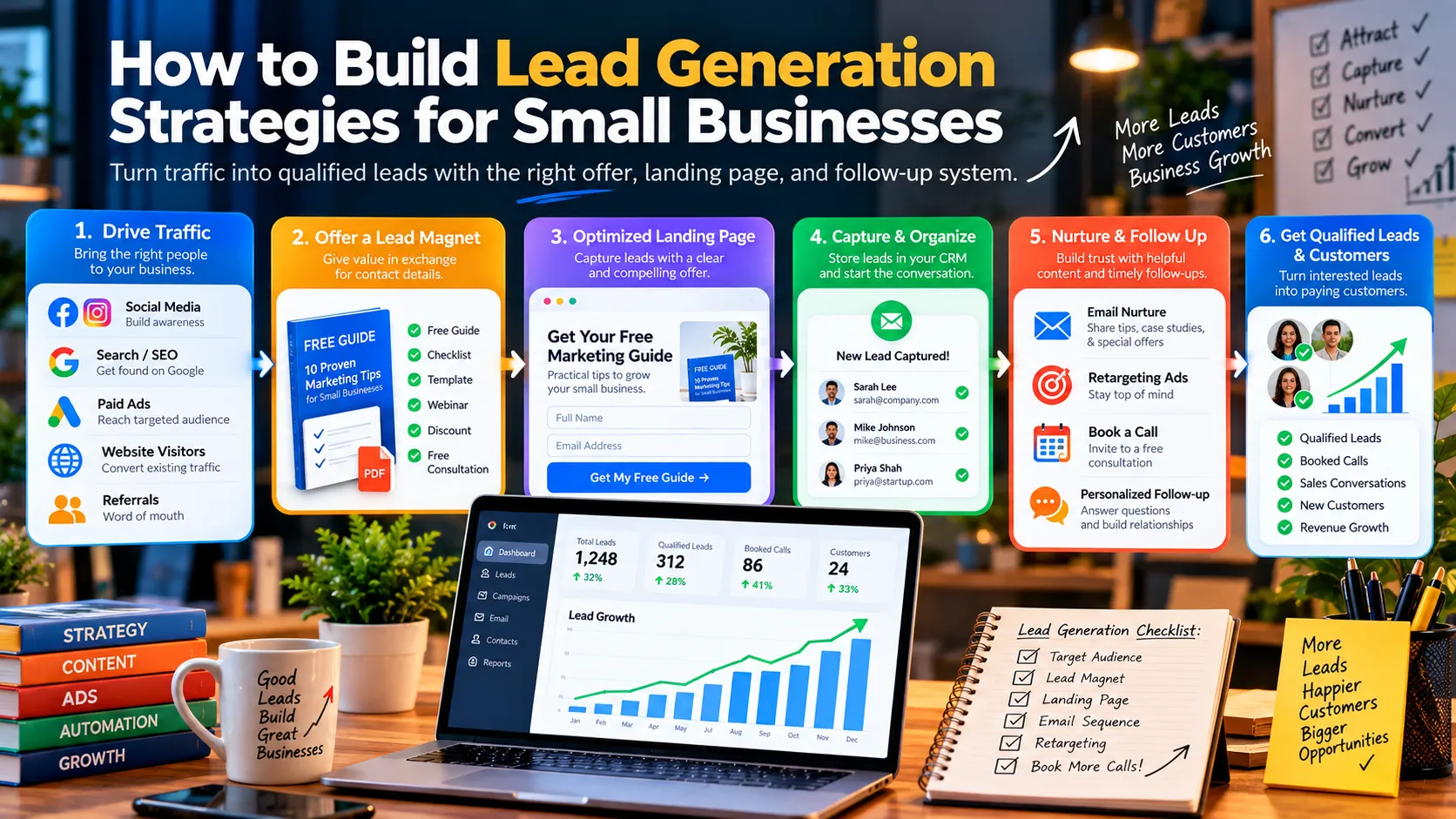
Before selecting marketing channels, establish the foundation that will guide your decisions. A successful acquisition system begins with a clear understanding of what the business offers, who needs it, and what makes someone likely to purchase.
Define Your Ideal Customer Profile
Your ideal customer profile describes the type of person or organization most likely to benefit from your product or service.
For a local service provider, the profile may include geographic location, household requirements, service needs, and purchasing urgency. For a B2B company, it may include industry, company size, decision-making authority, operational challenges, and available budget.
Use information from existing customers, sales conversations, customer reviews, website enquiries, and competitor research to identify common characteristics.
The objective is to understand actual purchasing behavior rather than create an imaginary customer profile based on assumptions.
Identify Customer Problems and Search Intent
People search online because they want information, solutions, comparisons, or access to a service.
Understanding search intent helps you create content that meets those expectations.
For example, someone searching for “how to improve website traffic” may want educational guidance. Someone searching for “SEO agency for small business” may already be comparing service providers.
Both searches can attract valuable visitors, but they require different content.
The first search may be better served by a detailed educational article, while the second requires a relevant service page explaining expertise, scope, process, and how to request a consultation.
Google’s SEO Starter Guide recommends creating useful, well-organized content that helps people understand a page and decide whether it meets their needs.
Create a Clear Value Proposition
Your value proposition explains why customers should consider your business instead of choosing another provider.
A strong value proposition identifies the customer, the problem, and the benefit of your solution. It should communicate something specific rather than rely on general statements such as “best quality” or “affordable service.”
For example, a small accounting firm might position itself around straightforward bookkeeping support for independent retailers. This message communicates a particular audience and a relevant business need.
The same principle applies to websites, advertisements, social media profiles, and email campaigns.
The Most Effective Lead Generation Strategies for Small Businesses
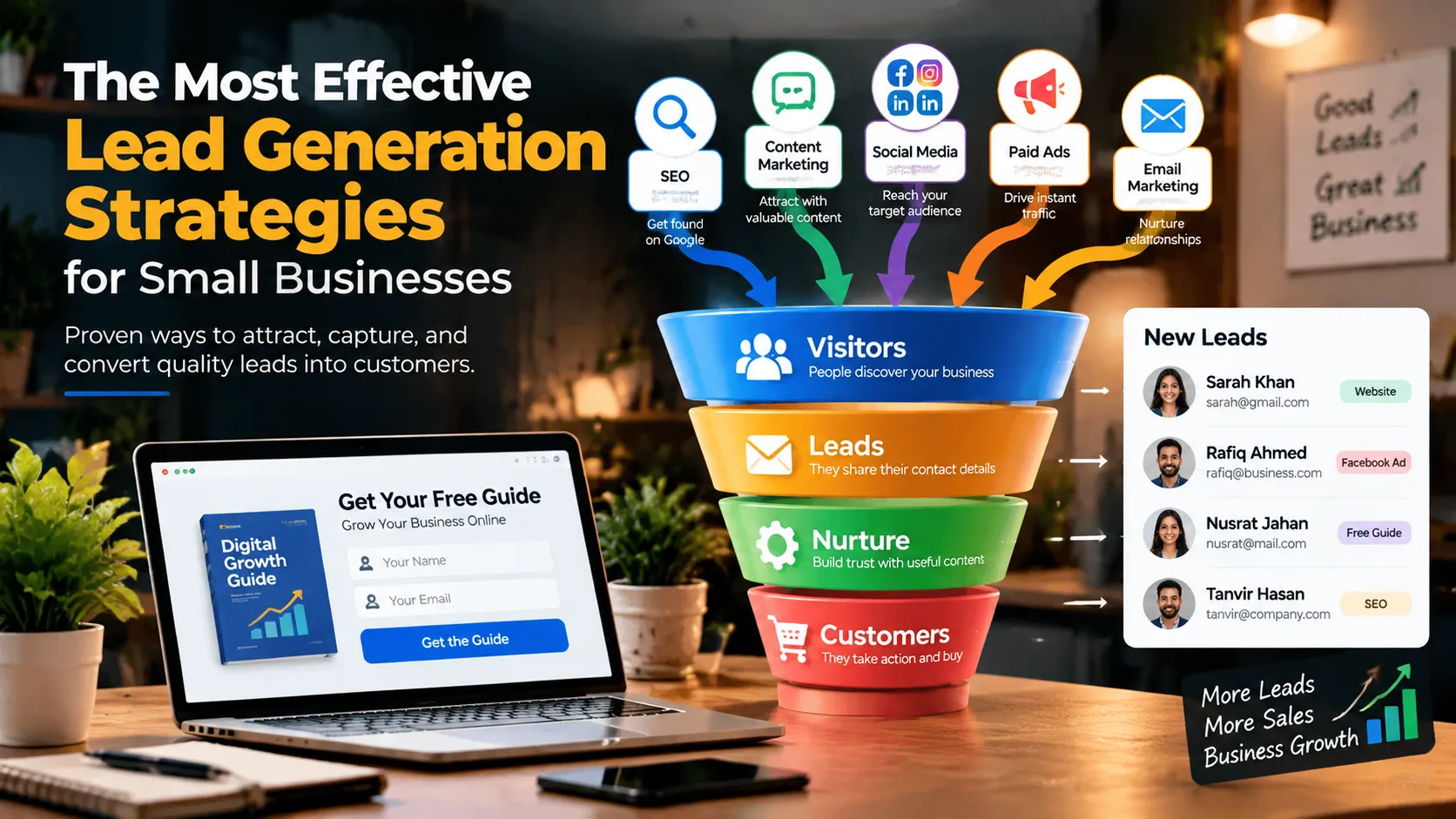
There is no single acquisition channel that works equally well for every business. A local contractor may depend heavily on Google searches and customer reviews, while a B2B consultancy may generate opportunities through professional content, LinkedIn, and industry relationships.
The following strategies provide a practical starting point. Select the methods that match your customers, resources, and purchasing process rather than trying to implement everything simultaneously.
1. Search Engine Optimization for Long-Term Lead Generation
Search engine optimization helps potential customers discover your website when they search for relevant products, services, and information.
SEO is particularly valuable because it can attract visitors who already have an interest in solving a particular problem.
For example, a local plumbing company may target searches related to emergency plumbing, pipe repairs, and bathroom installations. A software consultancy may create educational resources about business automation, system integration, and custom application development.
A successful SEO approach connects search visibility with conversion opportunities. Informational articles introduce your expertise, while relevant service pages explain how customers can work with your business.
The relationship between seo and small business growth becomes clearer when businesses measure more than keyword rankings. They should also examine relevant organic traffic, enquiries, qualified leads, and sales generated through search.
Businesses considering search engine optimization services for small business should evaluate the provider’s approach to technical SEO, content quality, search intent, internal linking, and performance measurement.
The best seo for small business strategy does not involve publishing hundreds of unrelated articles. It involves building useful resources around the services, industries, and problems that matter to the target audience.
GrowthAxis Solutions provides dedicated SEO & AI Search services that cover technical improvements, keyword research, on-page optimization, content relevance, and authority development.
2. Local SEO and Google Business Profile Optimization
Local SEO helps businesses attract customers searching for services within a particular geographic area.
This strategy is especially useful for restaurants, contractors, medical practices, salons, repair services, retail stores, and professional service providers.
A well-maintained Google Business Profile can help customers discover important business information, including opening hours, contact details, services, photographs, and customer reviews.
Google explains that local results primarily consider relevance, distance, and prominence. Businesses cannot simply pay Google to obtain a better organic local ranking. They should instead maintain accurate information and develop a trustworthy local presence.
Read Google’s official local ranking guidance to understand how these factors influence local discovery.
Effective seo for local business requires accurate business information, relevant service descriptions, useful location pages, and genuine customer feedback.
A business investing in local seo small business improvements should also consider the locations it can realistically serve. Creating pages for locations without genuine relevance or service coverage can weaken the customer experience.
For businesses researching seo services for small business, local optimization should be considered when geographic searches influence purchasing decisions.
GrowthAxis Solutions offers Local SEO services to help businesses improve local search visibility and strengthen their location-based digital presence.
3. Content Marketing That Attracts Potential Customers
Content marketing generates opportunities by providing information that helps people understand problems and evaluate solutions.
Instead of asking visitors to purchase immediately, businesses can attract attention through practical articles, educational videos, industry guides, case studies, and useful resources.
For example, a digital marketing agency could publish an article explaining how to calculate a small business advertising budget. The article could then link to a relevant service page where readers can request professional support.
This approach makes content part of a wider acquisition system.
The most useful seo marketing for small business programs connect keyword research with genuine customer questions. They also organize related articles around important service topics so readers can explore additional information naturally.
A business can strengthen its content strategy by publishing one comprehensive guide and several supporting articles that answer more specific questions. This creates opportunities for relevant internal links and helps readers navigate the website.
Explore GrowthAxis Solutions’ Content Marketing services for support with topic research, content planning, and search-focused resources.
4. Social Media Marketing for Audience Engagement
Social media helps businesses introduce their services, communicate expertise, demonstrate products, and develop relationships with potential customers.
However, an active social media account does not automatically generate qualified enquiries. Businesses need a clear content direction and a reason for people to take the next step.
The relationship between small business and social media marketing should begin with audience behavior. A visual ecommerce brand may benefit from Instagram and TikTok, while a B2B consultancy may receive more relevant opportunities through LinkedIn.
Useful social content can demonstrate how a product works, explain a common customer problem, answer frequently asked questions, and show genuine customer experiences.
A business should also make it easy for interested people to move from social platforms to a relevant website page, booking form, or enquiry channel.
GrowthAxis Solutions offers Social Media Marketing to help businesses organize content, audience research, campaign recommendations, and performance optimization.
5. Google Ads and Paid Advertising
Paid advertising can help businesses reach potential customers without waiting for organic search visibility to develop.
Google Ads is particularly useful when people actively search for a specific product or service. Social advertising can introduce an offer to selected audiences who may not yet be searching for it.
The important factor is campaign relevance.
An advertisement promoting website development should direct visitors to a page explaining website development, not a generic homepage that forces them to search for the relevant service again.
Businesses should also distinguish advertising expenditure from management costs and measure completed enquiries rather than relying only on clicks.
Suppose a business spends $600 on an advertising campaign and receives 20 enquiries. Its cost per lead is $30. If five of those enquiries become customers, the advertising cost per acquired customer is $120 before other campaign expenses.
Whether this is profitable depends on customer value, gross margin, fulfillment costs, and repeat business.
GrowthAxis Solutions provides Google Ads & PPC services focused on campaign structure, search intent, conversion tracking, and performance improvement.
6. Email Marketing and Lead Nurturing
Not every prospect is ready to purchase when they first discover a business.
Some people need additional information, time to compare alternatives, or approval from another decision-maker. Email marketing gives businesses an opportunity to maintain communication with interested prospects.
For example, a consultancy could offer a downloadable industry checklist in exchange for an email subscription. The subscriber might subsequently receive an educational email, a relevant case study, and an invitation to schedule a consultation.
This process helps prospects make informed decisions without requiring an immediate sales conversation.
Email campaigns should remain relevant to subscribers’ interests and comply with applicable privacy and electronic marketing requirements. The FTC’s CAN-SPAM compliance guide explains important requirements for commercial email in the United States. UK businesses should also review the Information Commissioner’s Office guidance on electronic marketing.
7. Referral Marketing and Customer Reviews
Existing customers can become an important source of new business.
People often value recommendations from individuals they know or trust. A positive customer experience can therefore create opportunities beyond the original purchase.
A referral system should make it easy for satisfied customers to recommend your business. For example, a home improvement company might provide customers with a simple referral link or ask whether they know someone who needs a similar service.
Customer reviews also support purchasing decisions. Genuine feedback can help potential customers understand service quality, communication, reliability, and the overall experience.
Businesses should request honest feedback without manipulating reviews or offering rewards in exchange for positive ratings.
8. Landing Pages and Lead Capture Forms
A landing page is designed to guide visitors toward a specific action.
Unlike a general website page, a focused landing page should communicate one primary offer and remove distractions that prevent visitors from responding.
For example, a digital marketing agency promoting an SEO audit might create a dedicated page explaining what the audit covers, who it benefits, what information the customer receives, and how to request it.
The enquiry form should collect enough information to begin a useful conversation without creating unnecessary friction.
A form requesting a name, email address, website, and a short description of the problem may be appropriate for a professional service. An extensive questionnaire may discourage visitors who are not yet ready to provide detailed information.
9. LinkedIn and B2B Networking
LinkedIn can support lead generation for businesses selling professional services, consulting, software, recruitment, and other B2B solutions.
The platform provides opportunities to build professional visibility, publish educational content, participate in relevant industry discussions, and develop relationships with decision-makers.
A small consultancy, for example, could share practical insights about operational challenges and connect with business owners who may benefit from its services.
Effective LinkedIn marketing requires relevance and genuine communication. Sending generic sales messages to large numbers of unrelated contacts may damage trust rather than create meaningful opportunities.
Which Lead Generation Channels Should Your Small Business Choose?
Different acquisition channels suit different business models. The following comparison can help identify a practical starting point.
| Marketing channel | Best suited business or objective |
|---|---|
| SEO and local SEO | Local services, professional firms, and businesses targeting ongoing search demand |
| Content marketing | Businesses that need to educate customers and demonstrate expertise |
| Social media | Visual brands, ecommerce businesses, and companies building audience relationships |
| Google Ads | Businesses targeting high-intent searches and immediate enquiries |
| Email marketing | Businesses with subscribers, existing customers, and longer buying cycles |
| Referral marketing | Service providers and businesses with satisfied customers |
| LinkedIn marketing | B2B companies, consultants, agencies, and professional services |
| Landing pages | Businesses running focused campaigns or promoting specific offers |
The best channel mix depends on customer behavior, competition, budget, and operational capacity. A small business should establish one reliable acquisition source before expanding into additional channels.
How to Build a Lead Generation System Step by Step
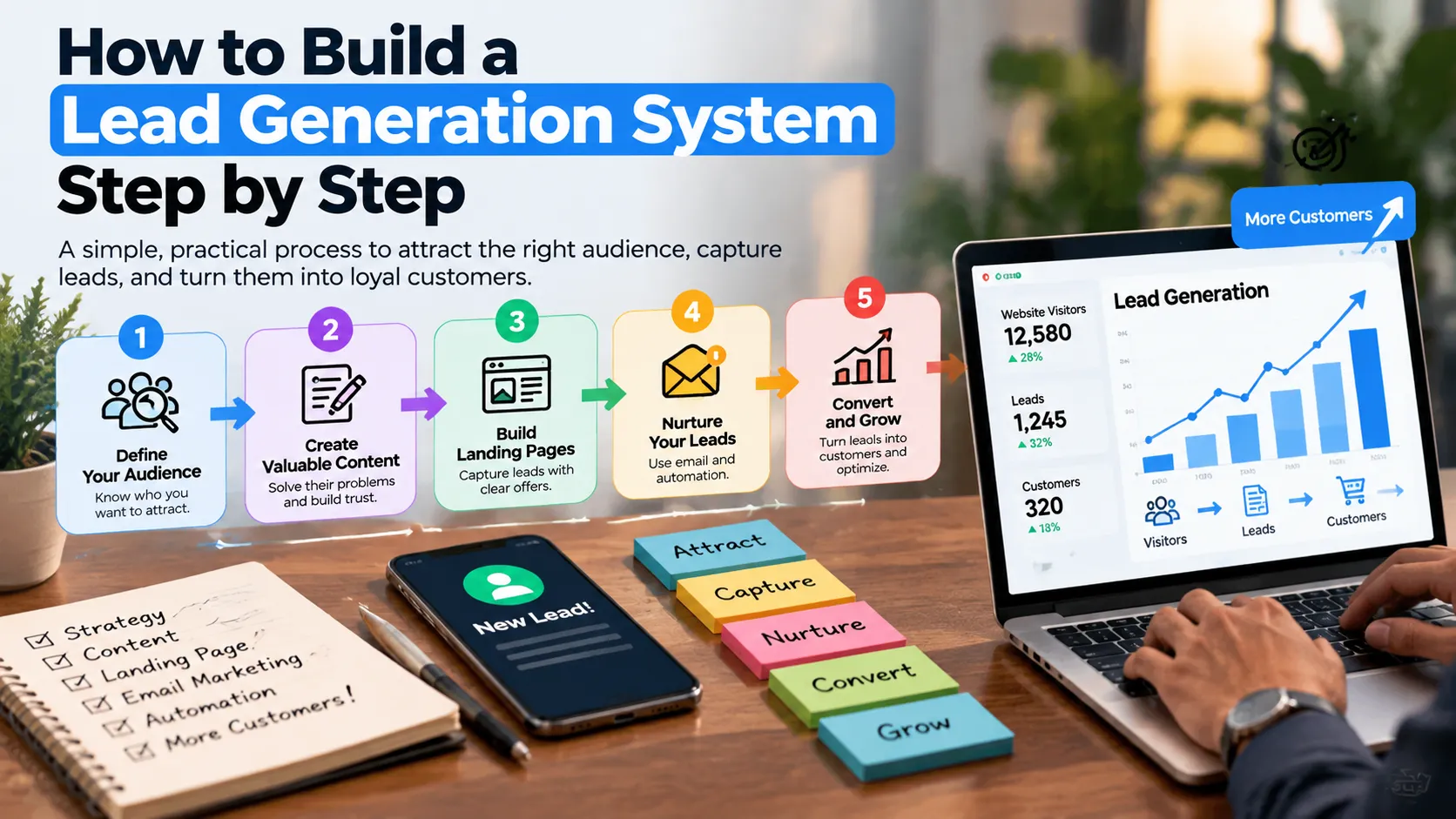
Individual marketing activities become more valuable when they work together. A visitor who discovers an article should have a logical way to explore related information, understand the business’s offer, and contact the company when ready.
Step 1: Create a Lead Generation Offer
A lead generation offer gives potential customers a reason to engage with your business.
For a service provider, it could be a consultation, quotation, website review, or useful industry resource. For an ecommerce business, it could be a product guide or a relevant first-purchase incentive.
The offer should address a genuine customer need and provide clear value.
Step 2: Create a Conversion-Focused Website Page
Build a page that explains the offer and answers the questions prospects need to resolve before responding.
A professional page should communicate the target audience, main benefit, process, relevant evidence, and next step.
Avoid exaggerated claims or unsupported promises. Clear information helps potential customers understand what they can realistically expect.
Step 3: Attract Relevant Visitors
Select channels according to the intent and behavior of your audience.
Organic search can attract people researching solutions, while paid advertising can target specific search terms or audiences. Social media and partnerships can introduce your offer to relevant communities.
Your content and advertisements should communicate the same message as the destination page.
Step 4: Capture and Organize Enquiries
Once visitors submit a form or contact your business, record their information in a suitable CRM or lead management system.
This allows the business to understand where enquiries originate, which services interest prospects, and what follow-up actions remain outstanding.
A spreadsheet can support a very small operation, but growing businesses may benefit from a CRM that organizes contact records, lead stages, sales activity, and reporting.
Step 5: Qualify and Follow Up
Respond to new enquiries promptly and understand the prospect’s requirements before presenting a solution.
A useful qualification conversation should establish the customer’s problem, expected outcome, relevant budget, purchasing timeline, and decision-making process.
Follow-up should add value rather than simply repeat a sales message. Share relevant information, clarify unanswered questions, and explain the next practical step.
Step 6: Measure Results and Improve
Review the complete acquisition process. Identify which sources produce qualified opportunities, which pages generate enquiries, and which leads become customers.
Improve the weakest stage before increasing campaign spending.
This creates a repeatable system instead of a collection of disconnected marketing activities.
How Much Should a Small Business Spend on Lead Generation?
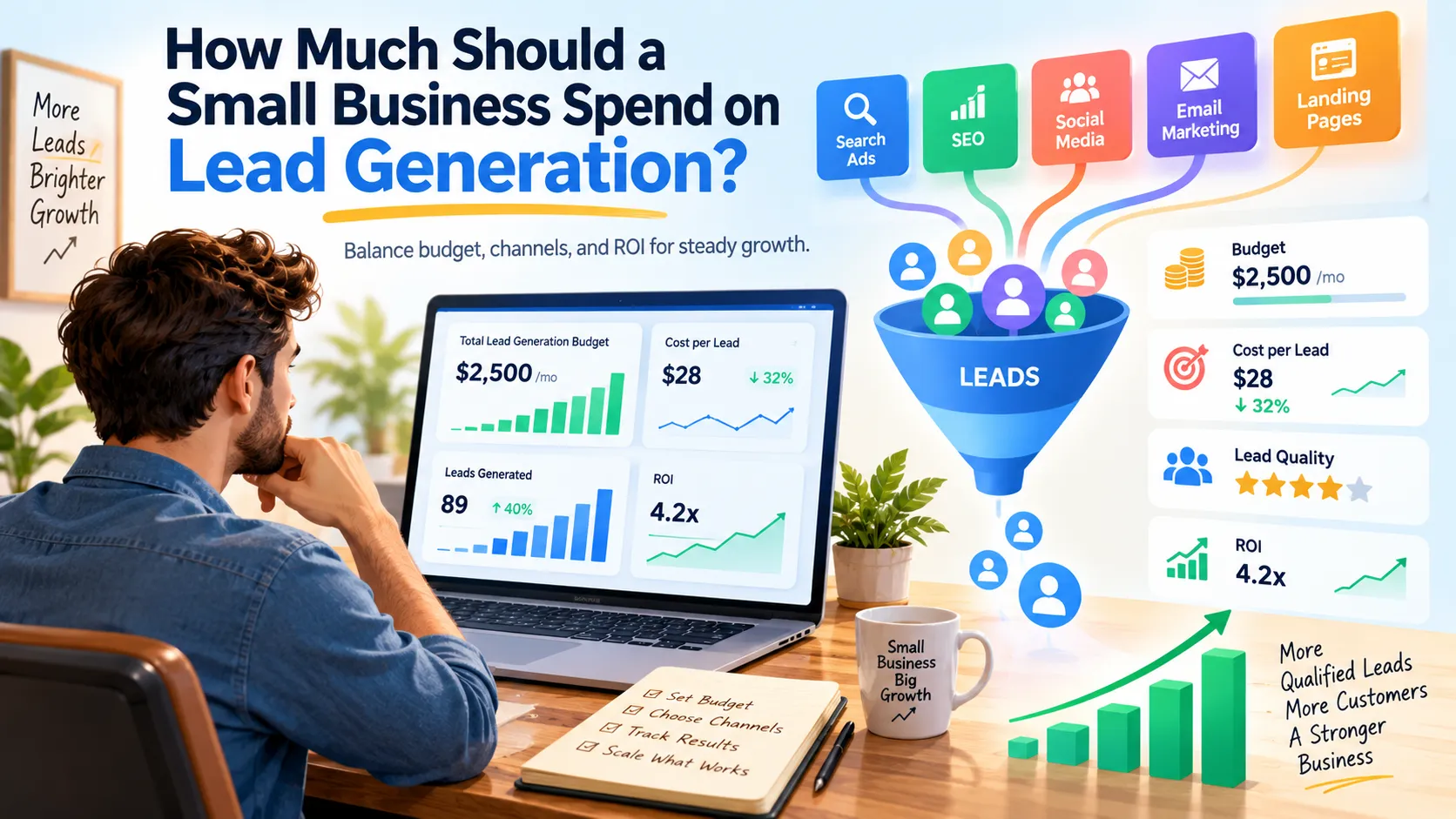
The appropriate investment depends on the value of a customer, the business’s profit margins, available cash flow, competition, and the number of enquiries required.
A small business should begin by understanding its customer acquisition economics.
For example, assume a service company wants to acquire 10 new customers each month. Its average contribution before acquisition costs is $400 per customer.
The company would generate $4,000 in contribution from those 10 customers before marketing and other excluded operating expenses.
If it spends $1,500 on acquisition activities, it must evaluate whether the resulting contribution adequately covers that spending and its remaining business costs.
The calculation should also include relevant labor, software, creative production, and agency fees when determining the fully loaded acquisition cost.
Calculate Your Cost Per Lead
Cost per lead measures the average amount spent to generate one lead.
Cost per lead = Total lead generation expenditure ÷ Number of leads generated
If a business spends $900 and receives 30 leads, its cost per lead is $30.
However, a low cost per lead does not automatically indicate a successful campaign. Businesses should examine the proportion of leads that meet qualification criteria and become customers.
Calculate Customer Acquisition Cost
Customer acquisition cost (CAC) measures the average expenditure required to acquire a new customer.
CAC = Total customer acquisition costs ÷ Number of new customers
If your business spends $1,500 and acquires 10 customers, the acquisition cost is $150 per customer.
Compare this amount with customer contribution, expected retention, and the time required to recover the investment.
Track Conversion Rates
Conversion rate measures the proportion of visitors or leads who complete a defined action.
Conversion rate = Number of conversions ÷ Total eligible visitors × 100
If 500 relevant visitors generate 25 enquiries, the visitor-to-lead conversion rate is 5%.
This metric helps identify whether your website and marketing message effectively turn relevant traffic into enquiries.
Essential Lead Generation Metrics Every Small Business Should Track
Tracking the correct measurements helps businesses identify opportunities and avoid spending money on activities that produce little commercial value.
| Metric | What it measures and why it matters |
|---|---|
| Cost per lead (CPL) | Average spending required to generate an enquiry; helps compare acquisition efficiency. |
| Customer acquisition cost (CAC) | Total acquisition cost per new customer; helps evaluate profitability. |
| Lead conversion rate | Percentage of visitors or prospects completing a defined action; indicates conversion effectiveness. |
| Lead qualification rate | Percentage of enquiries meeting your customer criteria; indicates lead relevance. |
| Lead-to-customer rate | Percentage of leads becoming paying customers; connects marketing with sales. |
| Return on investment (ROI) | Financial return compared with marketing expenditure; supports budget decisions. |
| Customer lifetime value (CLV) | Estimated value generated throughout a customer relationship; informs acquisition decisions. |
| Revenue by channel | Sales attributed to different marketing sources; reveals which channels contribute commercially. |
Google Analytics 4 can help businesses measure meaningful website actions. Its official lead-generation form measurement documentation explains how to track form submissions as key events.
For a more complete measurement system, connect website analytics with CRM records and actual sales outcomes. This helps distinguish a form submission from a qualified lead and a qualified lead from a paying customer.
Common Mistakes to Avoid in Lead Generation
Even well-funded marketing campaigns can underperform when businesses overlook the fundamentals. Avoid the following problems when developing your acquisition system.
- Targeting an overly broad audience: Trying to attract everyone makes messaging less relevant. Define a specific customer profile and communicate the value of your offer clearly.
- Ignoring website conversion problems: More traffic cannot solve a confusing website, unclear offer, or difficult enquiry process. Improve the destination before increasing acquisition spending.
- Prioritizing quantity over quality: Large enquiry volumes can hide poor customer fit. Measure qualified opportunities and completed sales alongside lead volume.
- Using only one acquisition channel: Depending entirely on referrals, paid advertisements, or social media can create instability when that source changes.
- Failing to follow up: Delayed responses and inconsistent communication can cause interested prospects to lose confidence or choose another provider.
- Ignoring existing customers: Repeat purchases, genuine reviews, and referrals can contribute significantly to long-term growth. Continue supporting customers after the initial sale.
- Buying contact lists without checking compliance: Purchased email databases can create privacy, deliverability, and legal problems. Verify applicable marketing requirements before collecting or using personal information.
Pro Tips for Generating More Qualified Leads
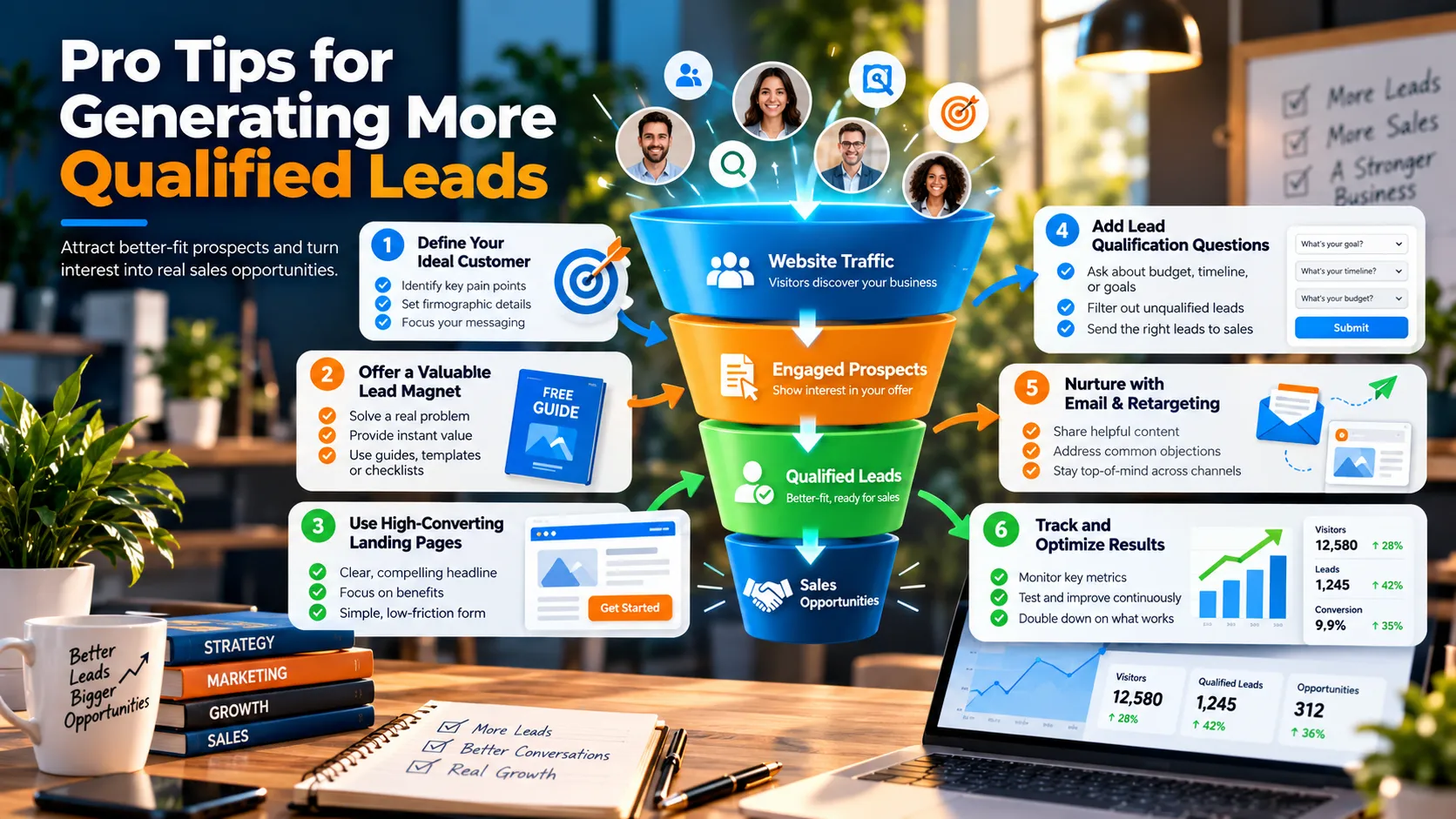
A successful acquisition system improves through consistent observation and testing. Small changes to messaging, landing pages, targeting, and follow-up can produce meaningful differences in lead quality.
Use Customer Questions as Content Opportunities
Your existing customers and sales conversations can reveal valuable content topics.
If prospects repeatedly ask about pricing, implementation time, service comparisons, or expected outcomes, create resources that answer those questions directly.
This approach helps you attract relevant search traffic while reducing repetitive explanations during sales conversations.
Improve Existing Pages Before Creating New Ones
Review your current service pages and articles before investing in additional content.
A page may already attract relevant impressions but fail to generate enquiries because its message is unclear or its call to action is difficult to find.
Improving existing resources can strengthen their usefulness and conversion potential.
Match Your Offer With the Visitor’s Intent
A visitor reading an introductory educational article may not be ready to request a sales consultation. A downloadable guide or related resource could provide a more appropriate next step.
Someone visiting a detailed service page may be closer to purchasing and may benefit from a quotation or consultation offer.
Matching the offer to the visitor’s needs helps reduce unnecessary friction.
Build Trust Through Genuine Evidence
Customers want to understand whether a business can deliver what it promises.
Use accurate testimonials, relevant examples, clear service descriptions, and transparent communication. If you publish performance figures or case studies, make sure you can verify the results and explain the context.
Test Before Scaling
Do not increase advertising expenditure simply because a campaign generates clicks or form submissions.
First confirm that the campaign attracts appropriate prospects and produces acceptable customer acquisition costs. Then expand gradually while monitoring lead quality and operational capacity.
A Practical 30-Day Lead Generation Plan
A small business does not need a complicated marketing operation to begin generating better enquiries. A focused 30-day plan can establish the foundation for a more consistent acquisition process.
Week 1: Research and Planning
Review existing customers, competitors, service pages, website enquiries, and search opportunities. Identify one customer segment and one primary service to prioritize.
Define what qualifies as a valuable lead and establish a realistic monthly target.
Week 2: Website and Content Improvements
Improve the main service page and create a relevant educational resource addressing a common customer problem.
Make sure the page includes useful information, appropriate internal links, and a clear enquiry option.
Week 3: Launch Your Acquisition Channels
Promote the resource through relevant social media channels, improve local search visibility where applicable, and test a focused advertising campaign if the website and tracking are ready.
Avoid spreading resources across too many platforms.
Week 4: Review and Improve
Review the number of enquiries, lead quality, cost per lead, response time, and customer conversions.
Identify the strongest acquisition source and the weakest point in the enquiry process. Use these findings to determine your priorities for the following month.
The purpose of this initial plan is to establish a repeatable process and collect meaningful information. It does not guarantee a particular number of customers or a fixed ranking position.
How GrowthAxis Solutions Can Help Small Businesses Generate Leads
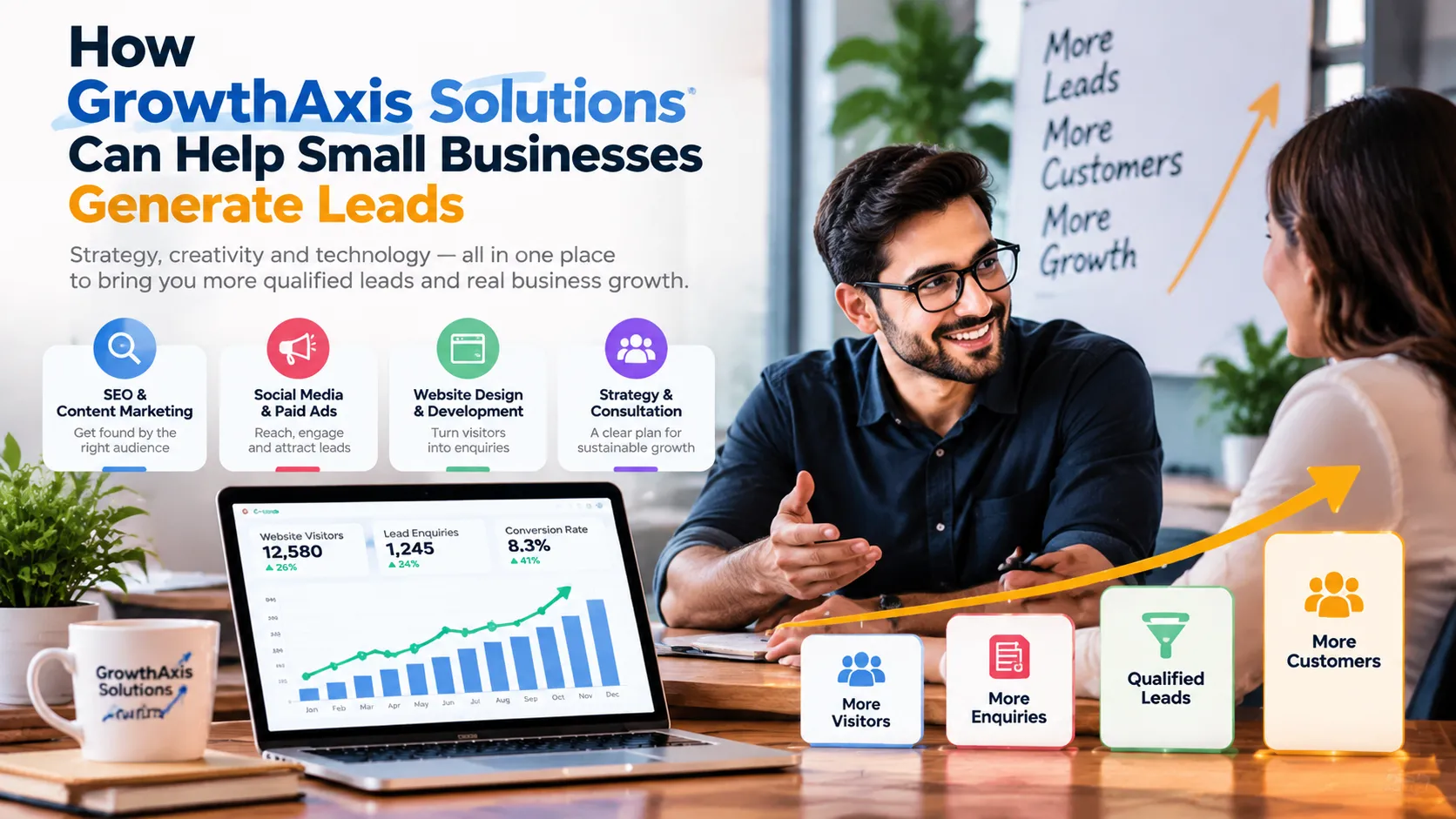
Building an effective acquisition system requires more than publishing content or running advertisements. Search visibility, website performance, creative communication, campaign targeting, and follow-up should support the same business objective.
GrowthAxis Solutions provides connected digital marketing and SEO solutions for businesses worldwide.
Its approach begins with understanding the business, audience, market, and existing digital presence. The team can then identify relevant opportunities and prioritize the work according to the company’s growth objectives.
For businesses that need broader support, Digital Marketing Services connect audience research, paid campaigns, content marketing, social media, and email marketing.
Companies that need better organic visibility can explore SEO & AI Search Services. Businesses targeting customers in specific geographic areas can also consider Local SEO.
For companies that need a wider plan before selecting individual channels, the Digital Marketing Strategy for Small Businesses guide provides additional direction.
The objective is to build a practical acquisition system that attracts relevant visitors, converts interest into enquiries, and supports measurable business growth.
Conclusion
Successful lead generation strategies for small businesses require a clear audience, relevant marketing channels, useful content, and a reliable conversion process. Focus on attracting qualified prospects, improving your website, and measuring actual customer acquisition results. Start with a manageable strategy and improve it consistently. Contact GrowthAxis Solutions to build a practical digital marketing system that supports sustainable business growth.
Frequently Asked Questions
1. What are the best lead generation strategies for small businesses?
The most effective approaches depend on the business model and target audience. SEO, local search optimization, content marketing, social media, paid advertising, email marketing, referrals, and conversion-focused landing pages can all generate opportunities. Small businesses should prioritize the channels that attract qualified prospects and produce customers at an acceptable acquisition cost.
2. How can a small business generate leads without spending money?
A business can begin with organic activities such as optimizing its existing website, publishing helpful content, improving its Google Business Profile, participating in relevant communities, and requesting honest customer referrals. These activities require time and consistent effort even when they do not involve direct advertising expenditure. A clear follow-up process also helps businesses make better use of the enquiries they already receive.
3. Is SEO effective for lead generation?
Yes. SEO can attract potential customers who actively search for relevant products, services, and solutions. Educational articles can introduce a business to new audiences, while optimized service pages can support enquiries from people with stronger purchasing intent. SEO works best when businesses connect relevant search traffic with useful information and clear conversion opportunities.
4. How much should a small business spend on lead generation?
The budget depends on customer value, profit margins, competition, available cash flow, and the number of customers the business wants to acquire. Start by calculating an acceptable customer acquisition cost and estimating the number of qualified leads needed to achieve the sales target. Allocate spending to channels that can realistically reach the intended audience and measure their results before increasing investment.
5. How do I get more qualified leads instead of just more enquiries?
Improve audience targeting, clarify your value proposition, and create content that addresses specific customer problems. Your enquiry forms can collect relevant qualification information without becoming unnecessarily complicated. Track which sources generate prospects who eventually purchase, then prioritize those sources over channels that produce large numbers of low-quality enquiries.
6. What is the difference between lead generation and lead nurturing?
Lead generation attracts potential customers and captures their interest. Lead nurturing develops those relationships through relevant communication, educational resources, follow-up, and helpful recommendations. Nurturing is particularly valuable when prospects need time to compare providers, secure approval, or understand a service before making a purchase.
7. Which social media platform is best for small business lead generation?
The best platform depends on the audience and the type of business. LinkedIn may be suitable for B2B companies and professional services, while Instagram and Facebook can support consumer brands, local businesses, and visually oriented products. TikTok and YouTube may help businesses that can explain or demonstrate their offerings through video. Focus on audience relevance rather than platform popularity.
8. How long does it take to generate leads through SEO?
The timeline depends on website authority, competition, technical health, content quality, search demand, and the services being targeted. Some improvements may create early visibility, while competitive organic search terms can require sustained work. Monitor impressions, clicks, relevant traffic, enquiries, and sales rather than expecting every SEO activity to produce immediate customers.
9. Do small businesses need a CRM for lead generation?
A CRM is useful when a business needs to organize enquiries, record customer interactions, manage follow-ups, and monitor sales opportunities. Very small businesses may begin with a structured spreadsheet, but a CRM can become valuable as lead volume increases. The important requirement is to maintain accurate records and ensure that promising prospects receive appropriate attention.
10. Should a small business hire a digital marketing agency for lead generation?
Hiring an agency can make sense when a business lacks internal marketing expertise, struggles to generate qualified enquiries, or needs support across SEO, advertising, content, and website optimization. Before choosing a provider, review its proposed strategy, deliverables, reporting process, communication, and measurement approach. A reliable agency should explain how its work supports business goals rather than promise guaranteed rankings or sales.